Partner Visa Processing Time Estimator™ · Free planning tool
Australian Partner Visa Processing Time Estimator.
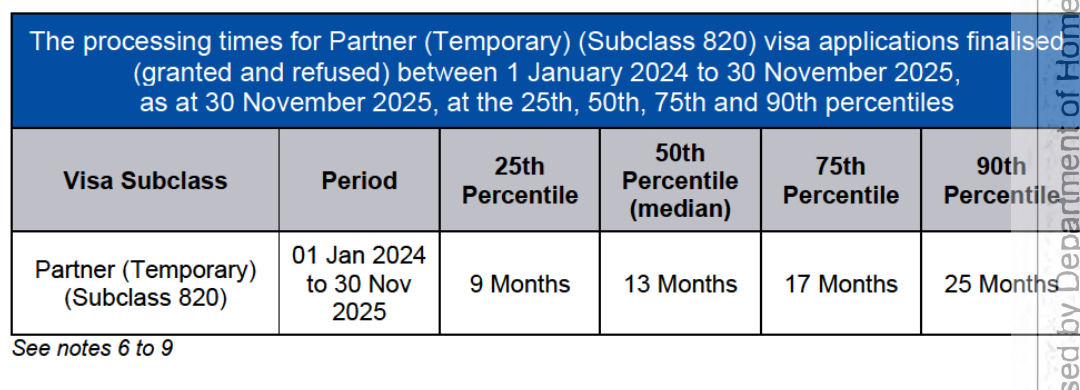
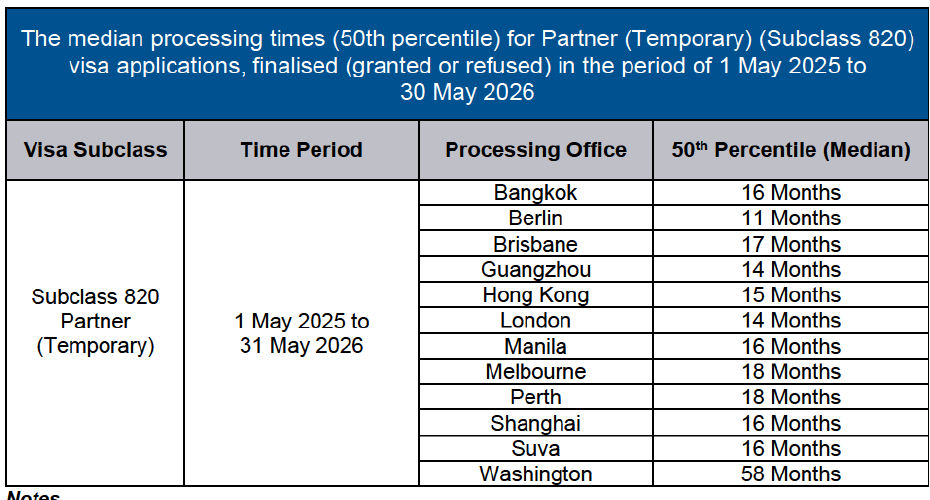
Use this free partner visa processing-time calculator to compare your passport country, visa subclass and lodgement location with Home Affairs figures and similar completed Salvo cases. Generate your full report instantly—no email required.
✓ Official sources linked✓ Similar Salvo cases shown✓ Clear, honest range
This example shows exactly how one set of answers is turned into a clear report. Your report appears on screen first. You can then email yourself a PDF copy for safe keeping.
Taken: latest median 16 months; longer published trend 7 months. The model uses 10.5 months for this 10% office layer after limiting the sharp recent shift.
Speak with an Australian partner visa legal practice.
The report is a planning tool. Legal advice can take account of facts that statistics cannot see.
salvomigration.com.au
Queensland Law SocietyNo Visa, No Fee**Conditions apply
Click the arrows or use your keyboard arrow keys to turn the pages.
Why this is different
A number you can understand and check.
Two people applying for the same subclass can have very different experiences. We first look for government results that match your passport country, subclass and location. If an exact match is unavailable, we tell you clearly and never quietly replace your country with another one.
01
Closest government match
We look for completed applications matching your passport country, subclass and location.
02
Real Salvo examples
If we have completed cases with the same country and subclass, you will see them in your result.
03
Sources you can open
Every government release and public case page is linked so you can check it yourself.
The methodology
We start with the closest, strongest information.
Large government result groups count the most. Australia-wide figures keep the estimate sensible. Smaller Salvo case groups and a confirmed processing office can adjust the result a little, but they cannot take it over.
We look for Home Affairs results matching your passport country, subclass and location when you applied.
2
Australia-wide figures
Current Home Affairs times provide a steady starting point for every estimate.
3
Completed Salvo cases
We use checked, completed cases from the same subclass. Small groups have limited influence, and public examples are de-identified.
4
Your processing office, if known
If Home Affairs has told you the office, you can add it. We never guess it from your passport.
i
What can move a real application outside the range?
Completeness, health and character checks, requests for further information, relationship evidence, sponsorship issues, caseload allocation, changing Department priorities and the individual facts of the application can all affect timing. Published statistics describe previous finalised applications; they do not control what happens next.
Need more than a number?
Get a legal view of the application behind the timeline.
Salvo Migration’s Queensland solicitors can assess the legal pathway, evidence and risks that statistics cannot see.
No. It is an independent planning estimate using published Home Affairs data and privacy-safe Salvo Migration case aggregates. It is not a Department forecast or a promised decision date.
How is the estimate calculated?
The closest large government results count the most. Australia-wide times keep every estimate grounded. Similar Salvo cases and a confirmed processing office can adjust the answer a little. Your result shows how much each source counted.
Why is there no country-specific figure for some selections?
Home Affairs sometimes does not publish times for small groups. When that happens, we tell you and use the other available sources. We never invent a comparison with another country.
Does my passport decide which processing office handles my case?
No. This tool does not infer a processing office from citizenship or location. Departmental allocation can change and is not reliably established from those inputs alone.
Does the new Family visa priority direction change this estimate?
Direction 117 began on 25 July 2026 and may change the relative order in which Family visa applications are considered. It is too new to measure its effect in months. The estimator does not add a guessed priority adjustment; it uses historical results and will be updated when new Home Affairs data becomes available. Read the full explanation.
What date should I use for subclass 100 or 801?
Those permanent stages are assessed from their relevant eligibility stage, not simply the original combined application date. The demo labels this separately; get advice if you are unsure which date applies.