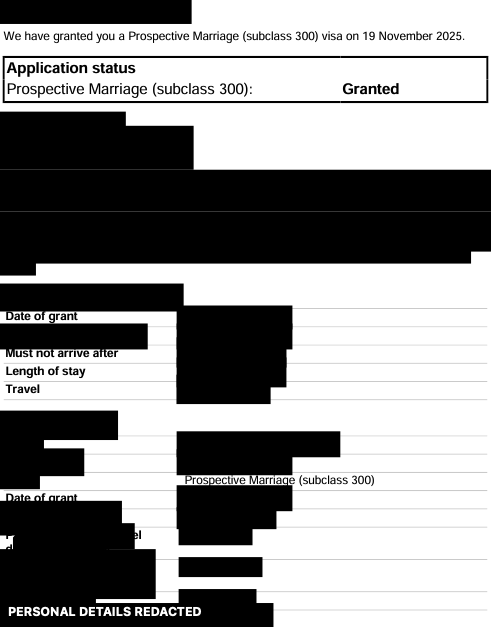
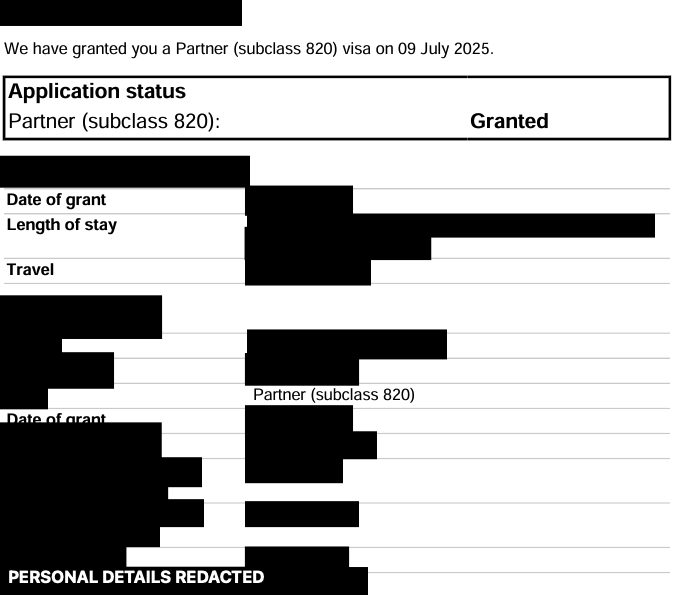
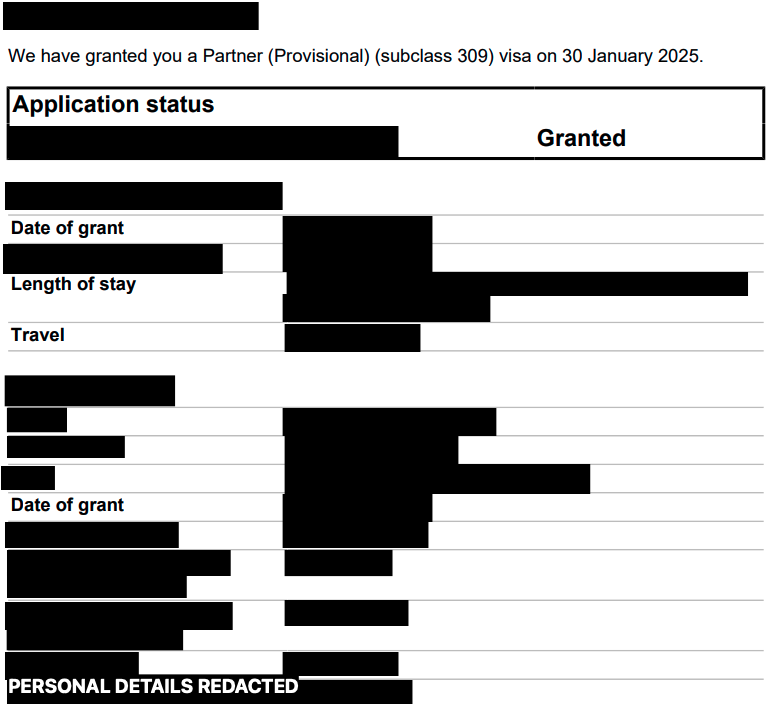
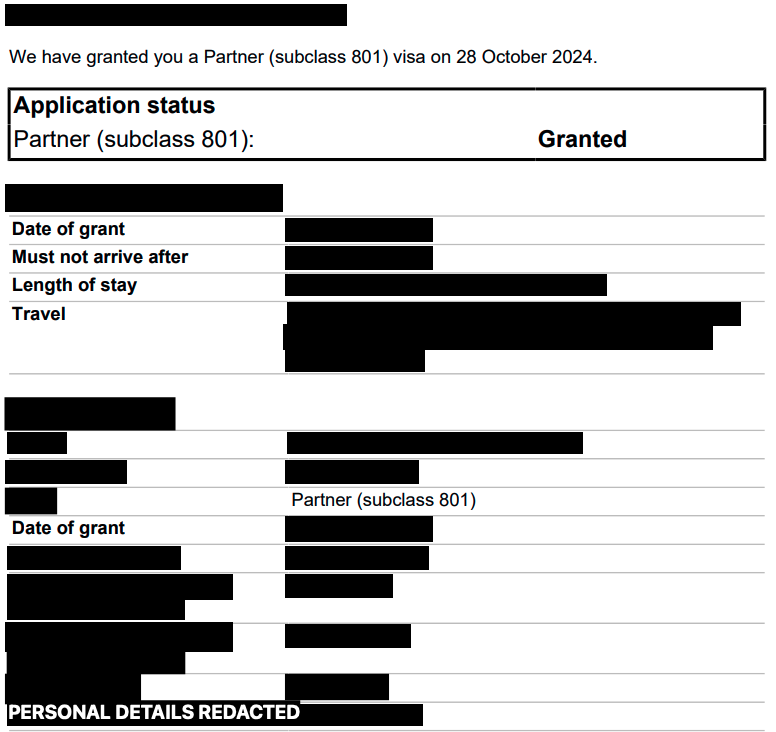
Philippines 309/100 case study
A published offshore Philippines case study where subclasses 309 and 100 were approved together. It is one past outcome, not a guarantee or a prediction for another couple.
Watch on YouTube →For couples between the Philippines and Australia, the usual pathways are offshore 309/100, prospective marriage subclass 300, or—when the applicant can apply in Australia—820/801. Our legal team helps you choose the pathway, organise evidence and understand fixed fees before engaging us.
26 published Philippines approval records Latest published grant: 29 May 2026 · 820/801, 309/100 and subclass 300 examples See processing times from 34 de-identified Philippines grants →If your partner is in the Philippines, the usual starting point depends on where they are when applying and whether you are married, de facto or engaged. Filipino citizenship alone does not determine the subclass.
Married and eligible de facto couples commonly consider the combined offshore subclass 309 and 100 application.
Compare the 309/100 pathway →Some couples who do not yet qualify as spouses or de facto partners may consider the subclass 300 Prospective Marriage visa.
Compare the subclass 300 pathway →The combined 820 and 801 pathway may be relevant if the applicant is in Australia and can lodge a valid onshore application.
Compare the 820/801 pathway →Reviewed by Martin Salvo, Principal Immigration Lawyer — verify Martin on the Queensland Law Society register. Published by Salvo Migration, an Australian partner visa law firm headquartered in Brisbane. Page data updated 31 July 2026. This is general information. Location, relationship status, current visa conditions and application timing can change the available pathway.
Costs and processing · Published Philippines approvals · Offshore partner visa videos
A useful Philippines partner visa file connects the applicant's civil records, every name used, periods living or working elsewhere and the couple's travel history before the relationship evidence is assembled.
Passports, birth or marriage records, earlier visas and police certificates should be checked for maiden names, married names, spelling differences and date consistency. Home Affairs says police certificates may be required for every name under which a person has been known.
Overseas employment can create additional address, travel and police-certificate requirements. Home Affairs generally asks about countries where a person lived for a cumulative 12 months in the past 10 years, so several shorter periods can matter.
If the applicant worked on merchant, cruise or other vessels, Home Affairs has specific character guidance involving the vessel's flag country and employment records. Do not assume an ordinary local police certificate covers that history.
Check the current Home Affairs family-visa document guidance and character and ship-worker instructions. Sources checked 15 July 2026.
Australian visa requirements are decided by Home Affairs. Separate Philippine government registration, counselling or departure processes can also apply, and a biometrics appointment may be required if Home Affairs instructs the applicant to provide biometrics.
The Philippine Commission on Filipinos Overseas publishes a Guidance and Counseling Program registration service for Filipino spouses, fiancés and other partners of foreign nationals, including former Filipino citizens and Filipino dual citizens. Check the current CFO route for the applicant's circumstances rather than assuming the Australian visa grant completes every Philippine departure step.
Check the official CFO guidance →Home Affairs will say whether an applicant must attend an Australian Biometrics Collection Centre or is eligible to use the Australian Immi App. The Philippines is currently listed for the app, but eligibility depends on the biometrics request letter and its Visa Lodgement Number. If an in-person appointment is required, VFS Global operates the contracted collection centres.
Check the Home Affairs biometrics instructions → Check Australian Immi App eligibility →These are operational and departure checks, not a substitute for Australian visa eligibility advice. Requirements and service arrangements can change; official sources checked 16 July 2026.
Government charges depend on the pathway, not simply on Filipino citizenship. The figures below are the standard main-applicant charges published by Home Affairs and checked on 30 July 2026. Family-member charges and health, police, biometric, translation and professional costs may be additional.
From AUD11,710 for the combined provisional and permanent application. The subclass 100 charge is covered when the combined application is lodged.
Check the official 309/100 charge →AUD11,710 for the standard main applicant. A further, reduced partner-visa charge may apply after marriage if an eligible subclass 300 holder lodges the later 820/801 application before the subclass 300 ends.
Check the official subclass 300 charge →From AUD11,710 for the combined temporary and permanent application where the applicant is in Australia and can validly use the onshore pathway.
Check the official 820/801 charge →Home Affairs publishes recently decided application ranges in its processing-time guide. They are an indication, not a deadline or a prediction for one couple. Evidence gaps, health or character checks, family composition and requests for more information can affect an individual matter.
Check the official processing-time guide →To compare the selected pathway and application date with available Philippines-specific Home Affairs data and de-identified Salvo cases, use the Partner Visa Processing Time Estimator. The result is a planning estimate, not a promised timeframe.
Home Affairs uses a global processing model: the office considering a partner visa is not determined by the applicant's nationality or location. The current lower partner-visa charge for specified Pacific Island and Timor-Leste passports does not list the Philippines.
Read the official global-processing explanation →Government charges can change, and the Home Affairs Visa Pricing Estimator controls the amount payable at lodgement. See our partner visa cost guide for professional fees and other common expenses, or examine 23 comparable Philippines partner visa processing periods from 34 de-identified grants.
A shared language or cultural understanding may matter to a couple, but the provider's authority and the person responsible for the immigration assistance still need to be checked. Home Affairs recognises registered migration agents, Australian legal practitioners and exempt persons—not a business label by itself.
A registered migration agent should appear on the OMARA register. An Australian lawyer should hold a practising certificate and be checked through the relevant legal-profession register.
Salvo Migration is a Brisbane-based legal practice providing remote partner visa services. This page does not claim a Philippines office or present Salvo as a Filipino migration-agent business.
Confirm who will advise and supervise the matter, what evidence and application work are included, the fixed professional fee, communication arrangements across time zones and each partner's responsibilities.
Read the current Home Affairs guidance on who can provide immigration assistance.
Many couples have strong relationships without a long joint lease or bank account. The application should explain what the available travel, communication, financial and family evidence actually demonstrates.
Passport movements, flights, accommodation and photographs should support the dates described by both partners. Organise records around meaningful visits and milestones rather than uploading every booking confirmation.
A balanced sample can show contact before, between and after visits, including mundane day-to-day interaction. Switching apps, poor connectivity or work rosters may explain gaps, but the explanation should be accurate and supported where possible.
Remittances or support payments may be relevant, but a transfer receipt alone does not explain whether money covered travel, household needs, family support or another purpose. Statements should describe the real financial arrangement.
Relatives and friends can describe how they know the couple and what they personally observed. Their evidence should use their own words and fit the same genuine timeline as the applicant and sponsor material.
Your relationship, your circumstances, and the right subclass — usually the offshore 309/100 or Prospective Marriage 300.
Shared finances, communication records, travel history and statements — compiled and lawyer-reviewed against the agreed evidence plan.
We prepare and review the application against the agreed pathway, evidence plan and legal scope before submission.
We keep you updated and address additional Home Affairs requirements within the agreed scope while the application is considered.
For eligible couples applying in Australia — begin with the temporary stage and progress to permanent assessment.
Learn more → Offshore✈️For partners applying from outside Australia — the temporary 309 brings your partner here while the permanent 100 processes.
Learn more → Engaged💍Travel to Australia and marry within the visa period — then move onto the partner visa pathway.
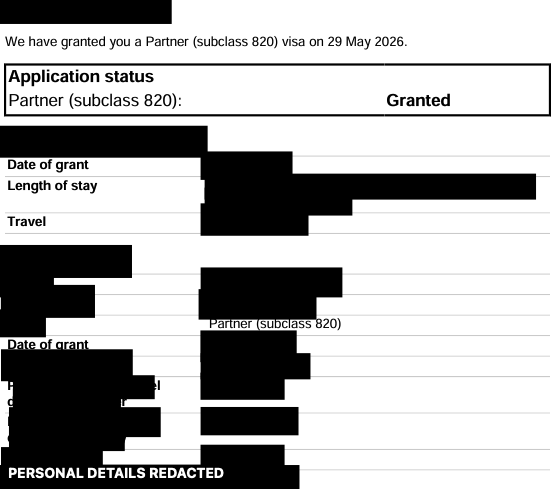
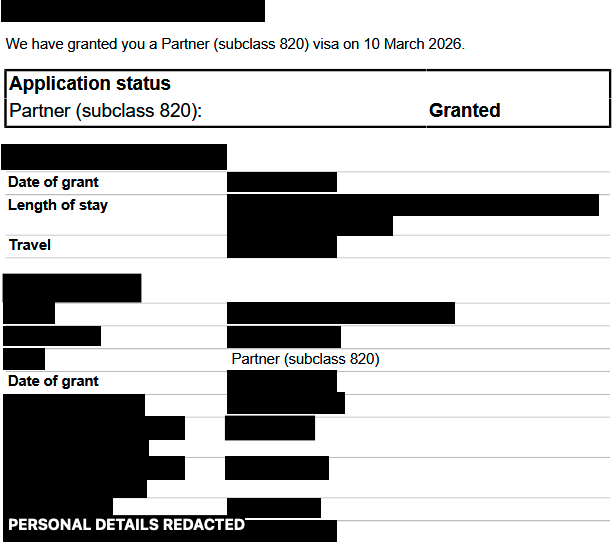
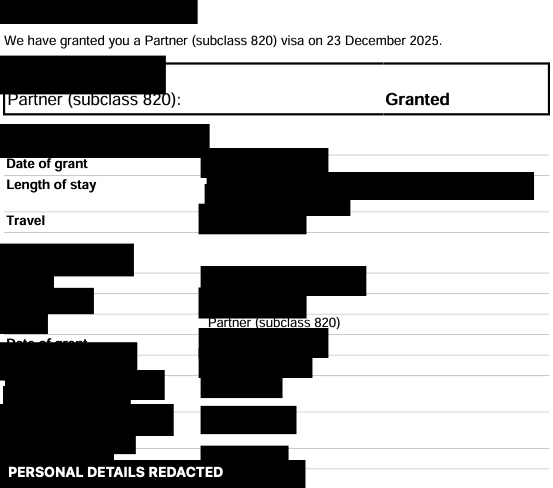
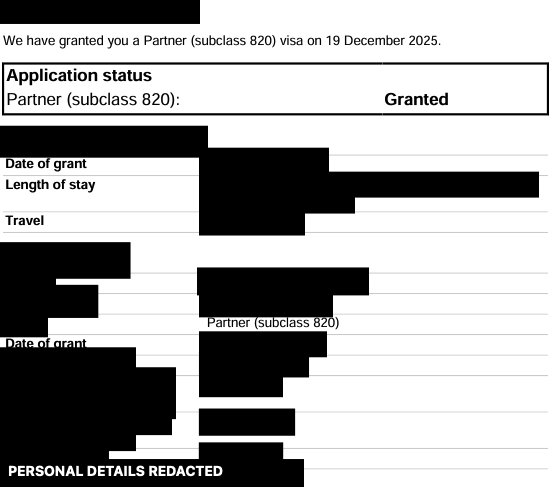
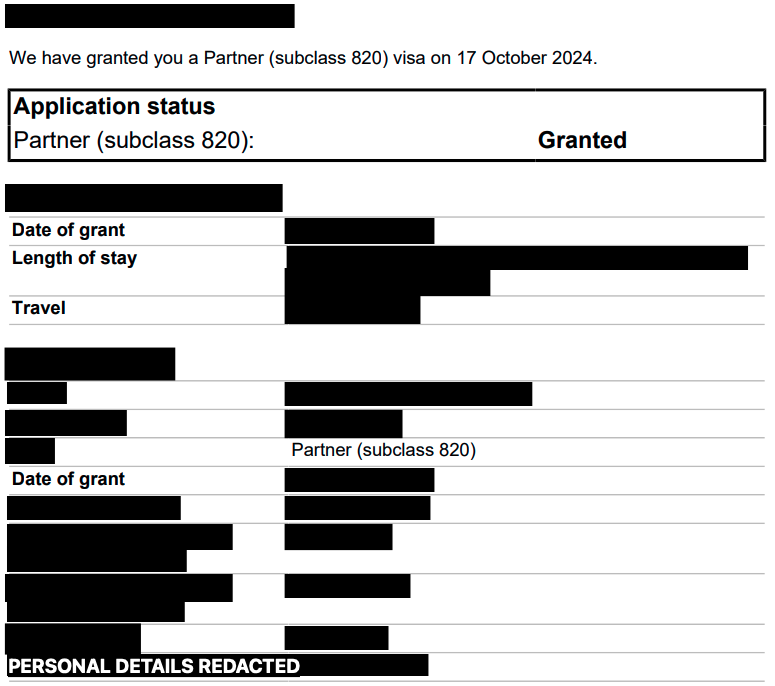
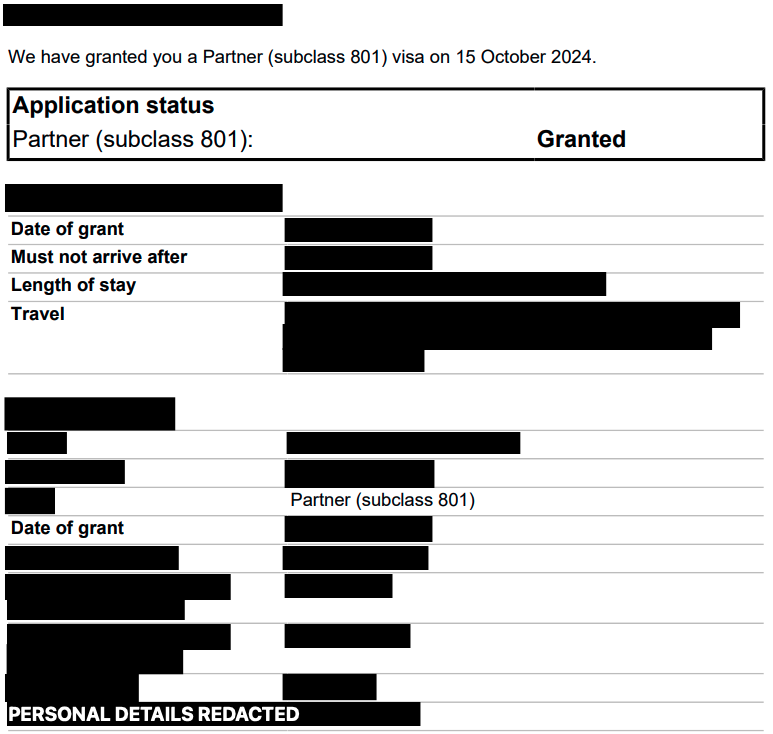
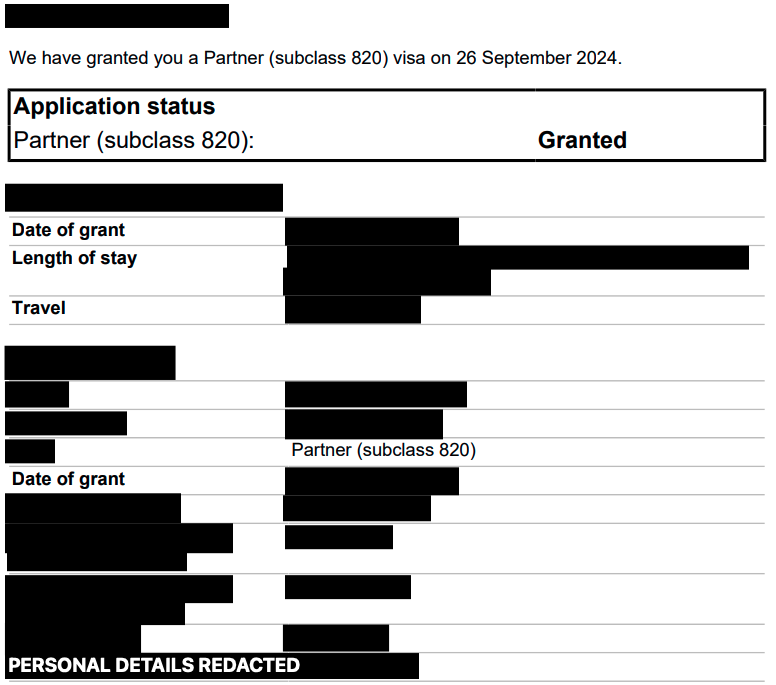
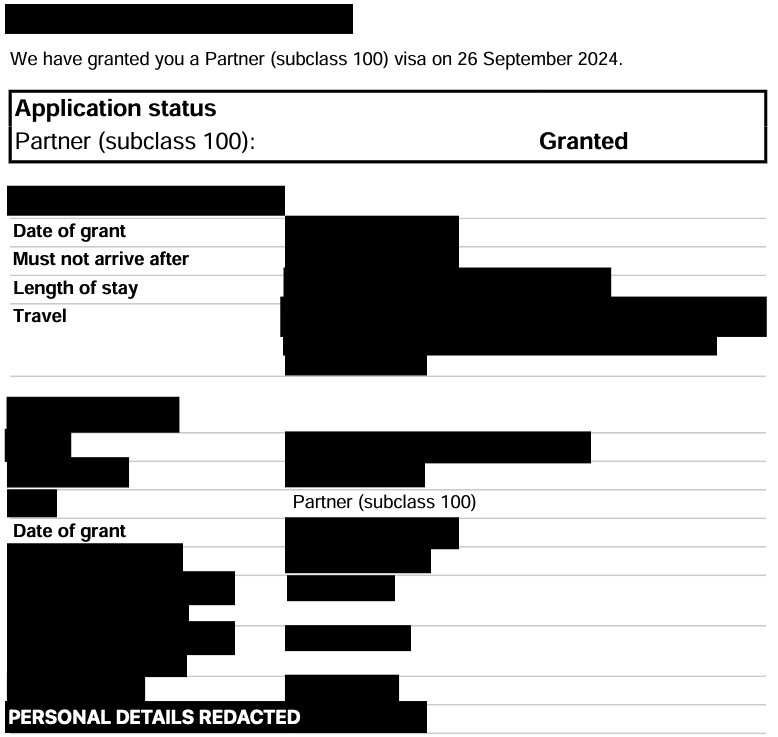
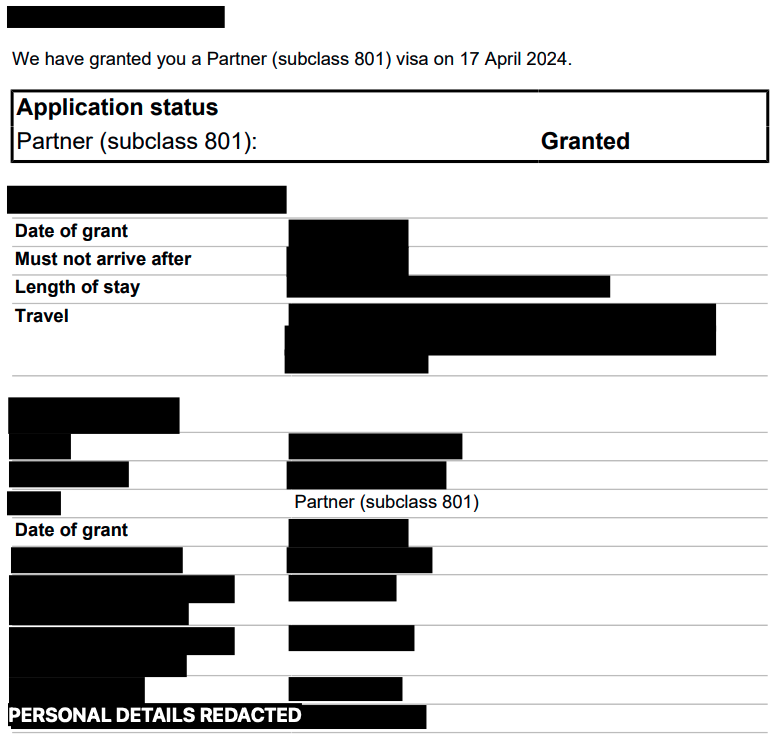
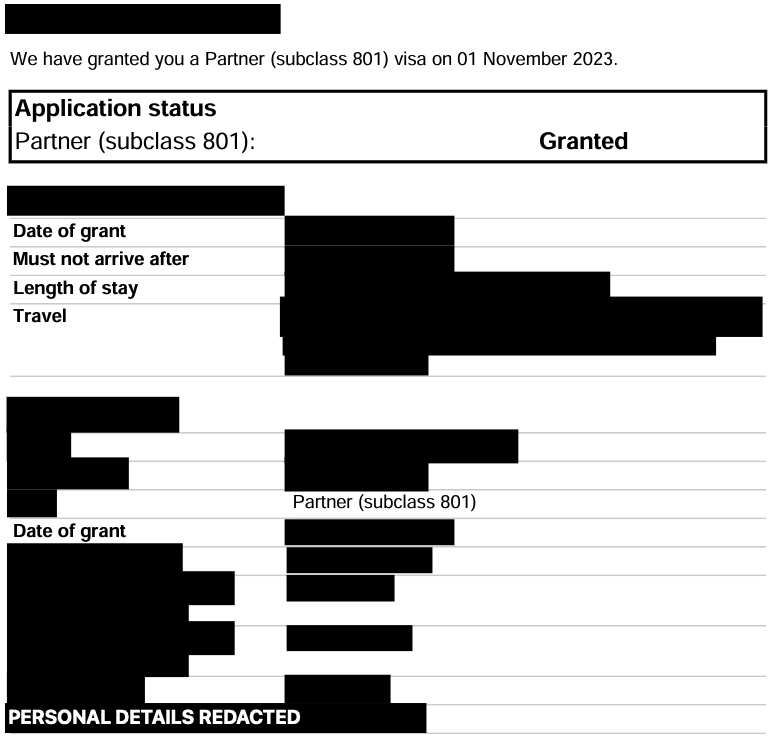
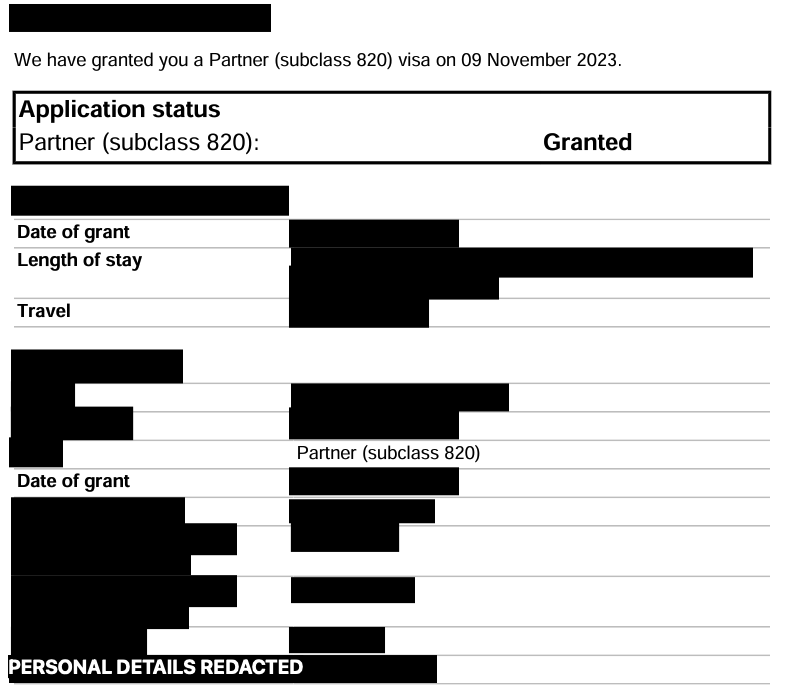
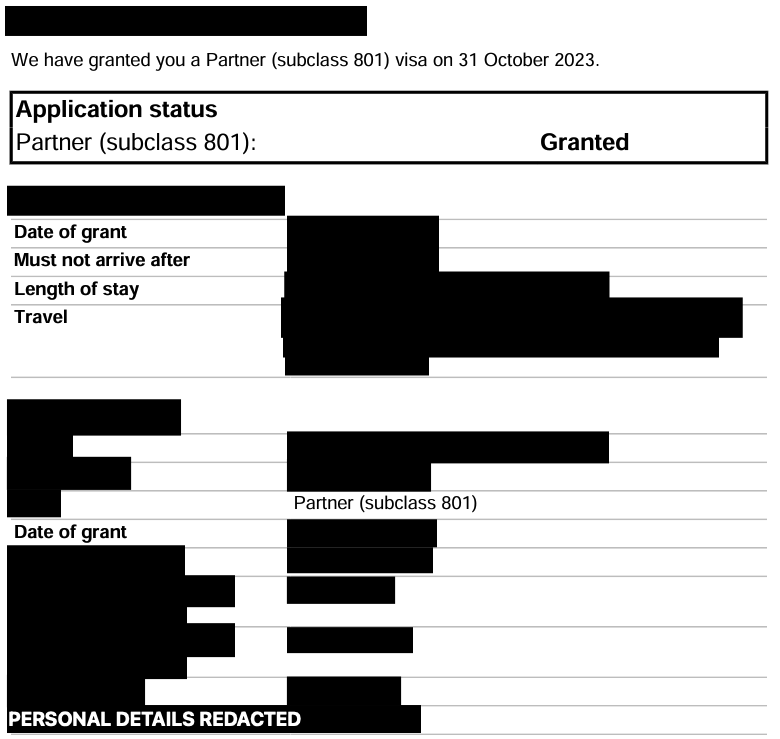
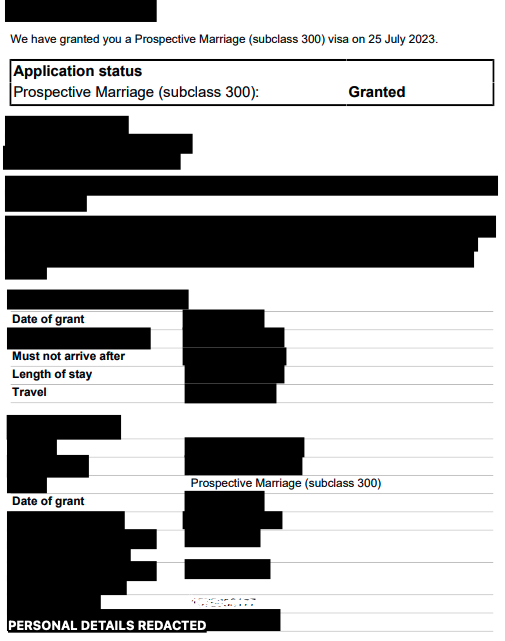
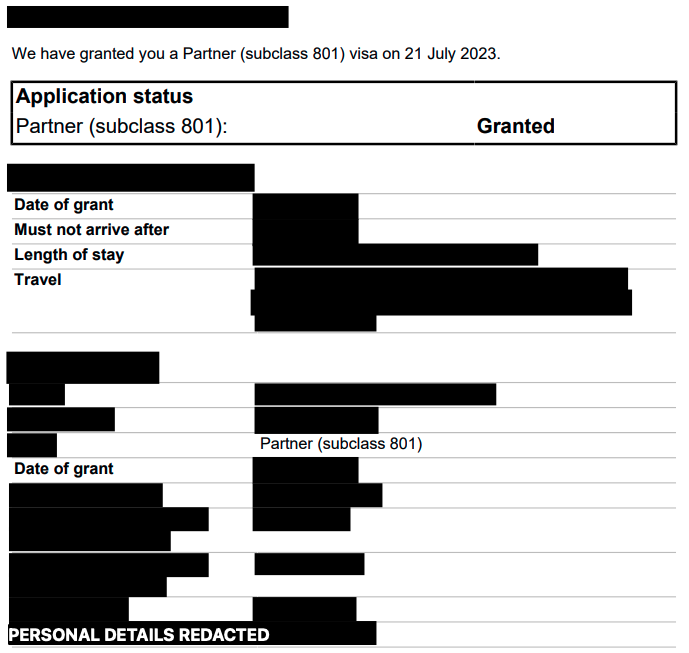
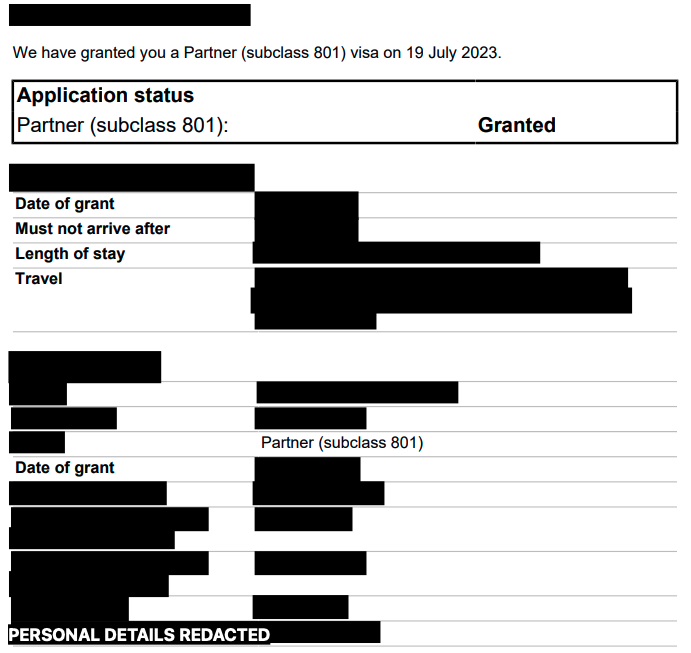
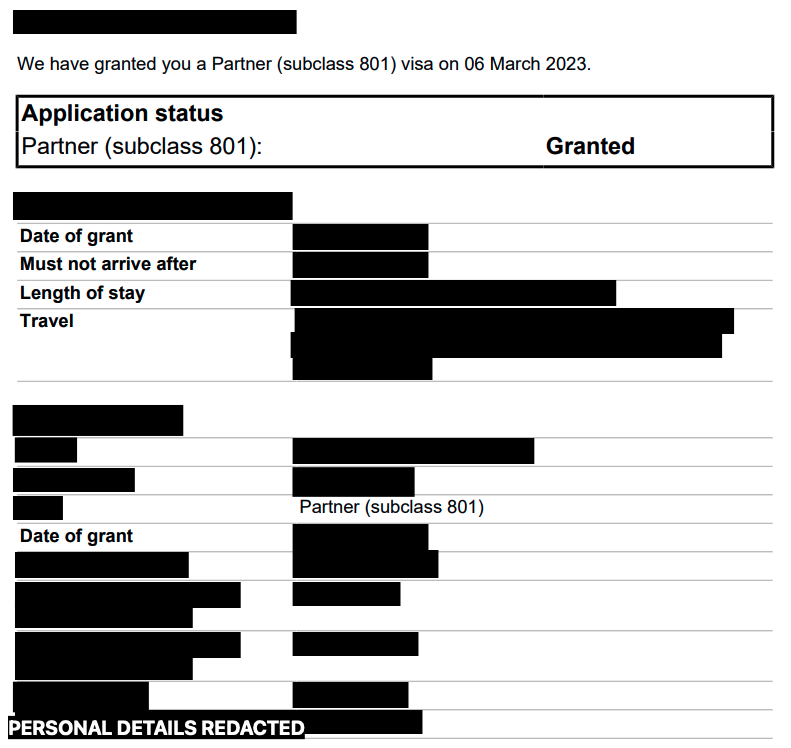
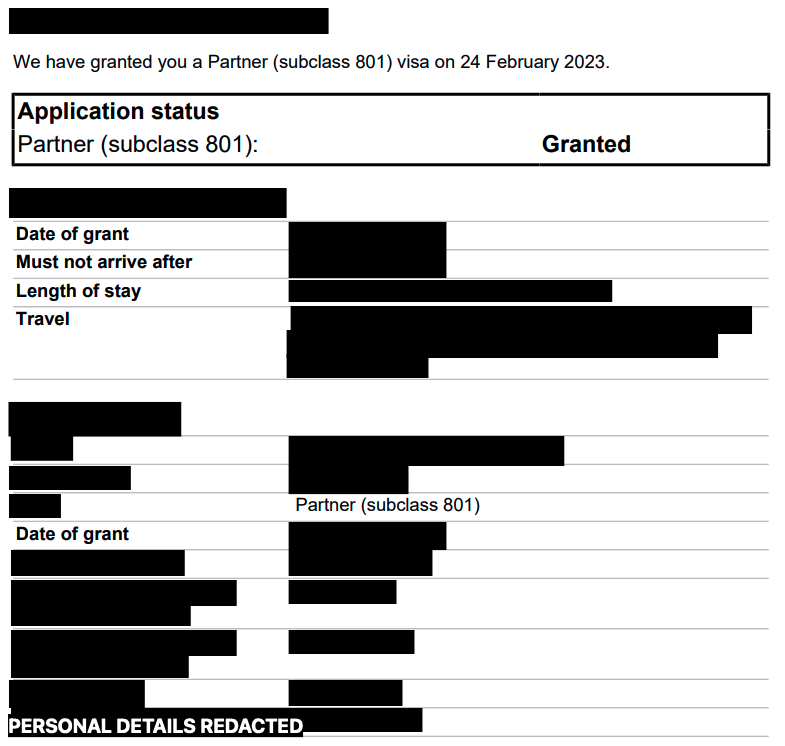
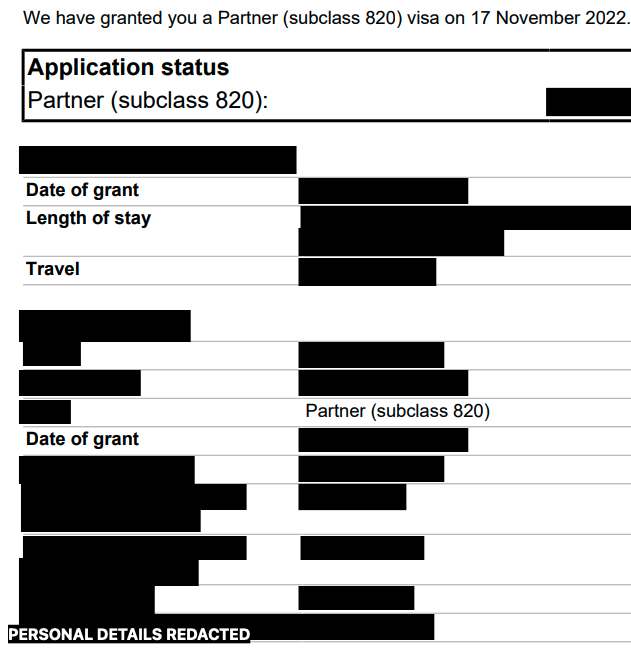
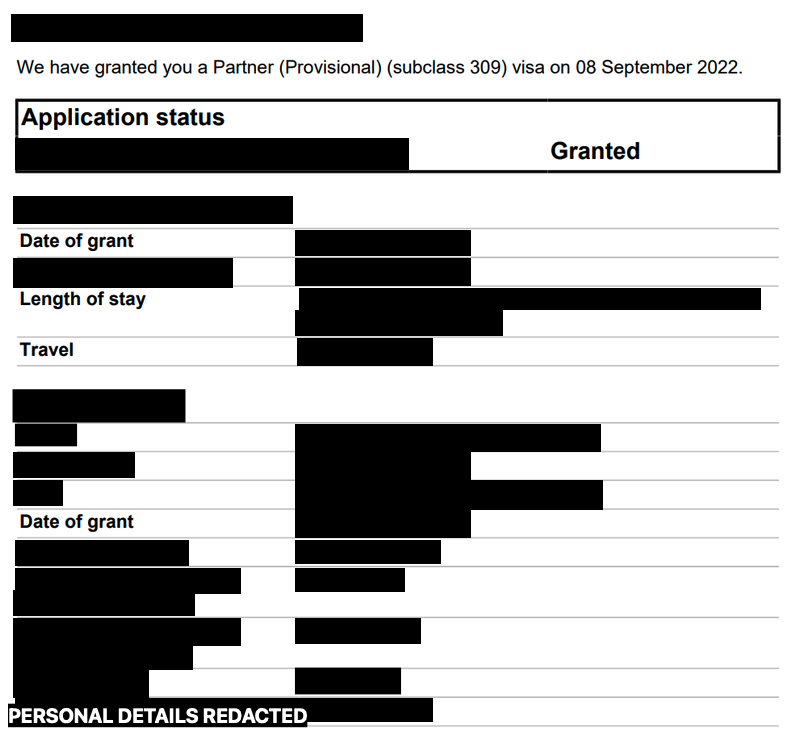
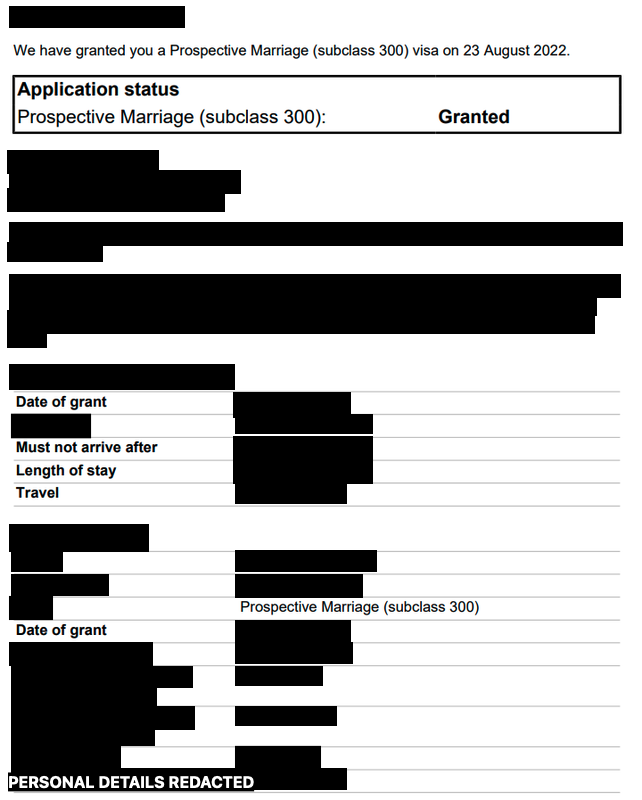
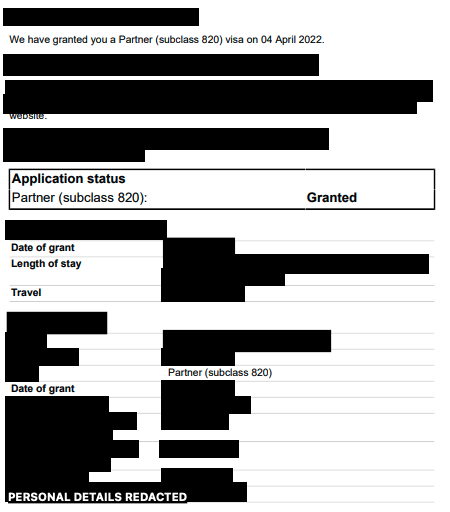
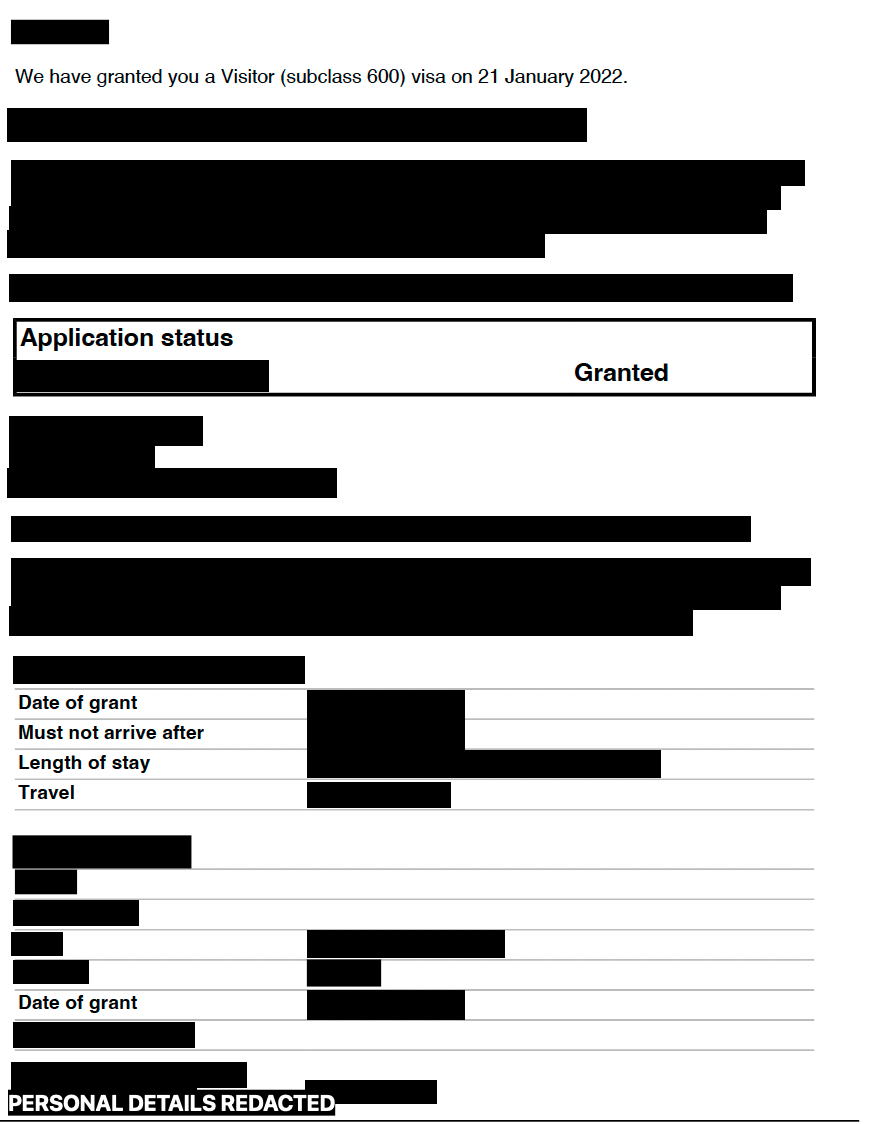
Learn more →These are all 26 Philippines passport-holder partner and prospective-marriage approvals currently identified in Salvo Migration's published approvals archive. Select a record to inspect its permanently redacted grant evidence.
Grant dates in this Philippines snapshot run from 21 January 2022 to 29 May 2026: 5 records in 2022, 8 in 2023, 6 in 2024, 5 in 2025 and 2 in 2026. These are counts of records in Salvo's published archive—not application volumes, a grant rate, processing-time statistics or a prediction for another couple.
The download contains only the non-identifying fields already published in the redacted archive. A listed processing-time field describes that historical record as published; it is not a current Home Affairs estimate or a comparable performance measure.
Loading published Philippines approvals…
Subclass 461 records are not shown here because that is the New Zealand Citizen Family Relationship pathway, not an Australian partner or prospective-marriage visa. Passport country describes the published record; it does not predict an outcome. Every application is decided on its own facts by Home Affairs.
These general videos cover offshore pathways, a published Philippines case study and relationship-evidence issues that can matter for couples with an age gap. They are educational only and may pre-date later visa changes, so check current requirements before acting.
A published offshore Philippines case study where subclasses 309 and 100 were approved together. It is one past outcome, not a guarantee or a prediction for another couple.
Watch on YouTube →How to address an age gap openly in relationship statements and supporting evidence. Age alone is not a visa rule, but couples should give the relationship clear context.
Watch on YouTube →Our 2025/26 discussion of offshore applications, visitor visas and planning time together while a partner matter is progressing.
Watch on YouTube →A dedicated introduction to the Australian offshore partner visa pathway for couples planning an application from outside Australia.
Watch on YouTube →A broader comparison of Australian partner visa options. This 2022 video provides background only; current settings must be checked.
Watch on YouTube →Review published visa approvals and, when you choose, load current Google reviews before deciding whether Salvo Migration is right for you.
See recent published outcomes with pathway and grant-date context. Personal details are redacted.
Inspect published approvals →Load the review source when you want to inspect recent client feedback.
Past outcomes and client reviews do not predict or guarantee the outcome of another application. Every matter is assessed on its own facts and decided by the Department of Home Affairs.
If your application is not approved and certain conditions are met, we'll refund our professional fees. Eligibility and conditions are confirmed in writing before engagement.
Submit an enquiry →*Applies to eligible partner visa applications where guarantee conditions are met.
A married or de facto partner in the Philippines will often consider the offshore subclass 309/100 partner pathway. An engaged couple intending to marry may consider the subclass 300 Prospective Marriage visa. “Spouse visa” and “fiancé visa” are common search terms, but Australia uses specific visa subclasses. The right starting point depends on relationship status, the applicant's location and whether the legal requirements can be met; nationality alone does not select the pathway.
A separate Visitor visa application may be considered, but it must satisfy its own requirements and approval is not guaranteed. The Australian Embassy in the Philippines publishes the same boundary for people with a partner visa application in progress.
The Philippine Commission on Filipinos Overseas publishes a Guidance and Counseling Program for Filipino spouses, fiancés and other partners of foreign nationals, including former Filipino citizens and Filipino dual citizens. Whether and when the applicant must complete a CFO process should be checked directly against the current official CFO guidance. It is a Philippine-side departure or registration question, separate from whether Home Affairs grants an Australian visa.
Follow the Home Affairs request letter. It will indicate whether the applicant must attend an Australian Biometrics Collection Centre operated by VFS Global or may use the Australian Immi App. The Philippines is currently listed for the app, but the request letter and Visa Lodgement Number determine eligibility. Do not book an appointment or use the app merely because a partner visa was lodged if Home Affairs has not requested biometrics.
There is no separate guaranteed Philippines timeframe. Home Affairs uses a global processing model and publishes recently decided ranges in its processing-time guide. The range is an indication, not a deadline for an individual application. Our partner visa processing-times guide explains the official indication, while the Philippines case-data page reports Salvo's historical de-identified cases separately.
As checked on 30 July 2026, the Home Affairs current pricing table lists the standard main-applicant charge as AUD11,710 for a combined 309/100 or 820/801 application and for subclass 300. Family members and health, police, biometric, translation and professional costs may be additional. Check the official Visa Pricing Estimator before lodging.
Living in different countries does not by itself prevent a married or de facto couple from qualifying. Home Affairs assesses whether the relationship is genuine and continuing, whether the couple has a mutual commitment to a shared life and whether they live together or do not live separately and apart on a permanent basis. Evidence may need to explain time apart and show communication, visits, shared decisions, financial support or commitments and future plans. For a de facto application, the usual 12-month relationship rule still needs separate attention: time spent dating or only in an online relationship might not count as a de facto relationship. An engaged couple that does not yet qualify as spouses or de facto partners may instead need to consider subclass 300. See the current Home Affairs offshore partner evidence guidance.
Marriage is not always required. A person may qualify as a de facto partner, but Home Affairs says the de facto relationship must usually have existed for at least 12 months immediately before a partner visa application. Time spent dating or only in an online relationship might not count as a de facto relationship. Registered relationships and limited other exceptions can affect the 12-month requirement, so the facts should be checked before relying on an exception. Read the current Home Affairs relationship guidance.
It depends on the visa you hold. Home Affairs says visa holders should check whether their visa permits a subsequent entrant and whether the family member was previously declared. If it does not, the partner needs a visa that fits their own intended stay. If you are an Australian citizen or permanent resident, your partner does not travel on your citizenship or permanent residence and will need an appropriate visa, which may be a partner, prospective marriage or temporary visa depending on the circumstances. Check the official bringing-a-partner guidance.
Review rights and deadlines depend on the decision, the applicant's circumstances and where they were when the application was made. Get the decision checked promptly and read our partner visa refusal guidance.
Yes. The initial strategy call covers the proposed pathway, professional fees and next steps. Detailed legal advice or document review may require a separately agreed scope.
Yes, dependent children can be included. You'll need to provide evidence of their dependency and meet specific requirements.
No — we work with clients in the Philippines and worldwide entirely by phone, WhatsApp or Zoom, with the same service we give clients in Brisbane.
Submit an enquiry about eligibility, pathway, fees and next steps for bringing your partner from the Philippines to Australia. After submitting, you can book a strategy call if you want to speed up the process.
Prefer to talk now? 1300 644 788